Timer's Up, Sweetheart: The Rise of the Short-Lease Boyfriend
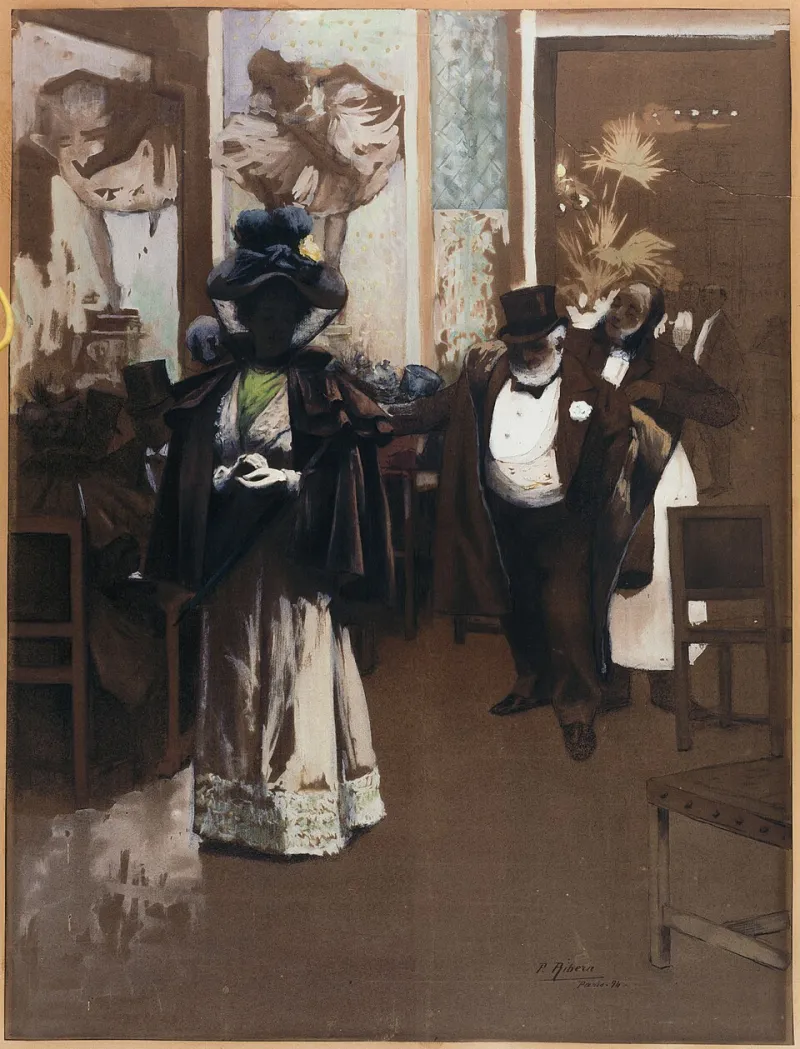
Photo: Ribéra, Pierre (Madrid, 02–12–1867 - Paris, 01–01–1932), dessinateur, CC0, via Wikimedia Commons
There is a specific sound that has become the unofficial soundtrack of the 2026 date night: a phone buzzing face-down on a restaurant table at 8:47 p.m., followed by a woman saying, "That's me," in the tone of someone who is neither sorry nor making a second pot of coffee.
Her companion nods. He has been briefed. Ninety minutes, give or take the time it takes to fight over the last mozzarella stick, and then the lease expires. No dessert. No "we should do this again" limbo. No twenty-minute parking-lot negotiation about whether a hug is a handshake with extra steps.
Welcome to the micro-date, the strangest and most sensible thing to happen to paid companionship since someone realized you could charge by the hour and still call it romance.
The Stopwatch Is the Selling Point
Ask anyone in the business and they'll tell you the same thing: the two-hour booking used to be the standard, the safe middle. Now the ninety-minute slot is the one that fills up fastest, sometimes with a waitlist. It's the reservation equivalent of a summer blockbuster—long enough to feel like an event, short enough that you don't check your watch.
And the watch is the whole point. Not because the client is bored, but because the exit is baked in. Nobody has to invent a dying grandmother, a dog with separation anxiety, or a 6 a.m. spin class. The clock does the lying for you, and it does it with impeccable manners.
What Ninety Minutes Actually Buys
Strip away the marketing copy and the package is simple: a drink, an appetizer, a walk if the weather cooperates, and a conversation that has a beginning, a middle, and—crucially—an end. Providers describe it as a short story rather than a novel. You get the meet-cute, the banter, the one revealing anecdote, and then the page turns.
The client gets to be charming for exactly as long as charm is sustainable. The provider gets a clean handoff and a schedule that doesn't swallow an entire evening. Everyone walks away with their dignity and their Tuesday intact.
One companion in Austin calls it "the appetizer date" and means it as a compliment. "Most people are delightful for seventy minutes," she says. "The last twenty are where the weird stuff lives. I'm not trying to find out what's in the last twenty."
The Economics of Ending Early
The pricing is where things get interesting. Per-minute, the short booking is almost always the more expensive option—providers charge a premium for the compressed window, the same way a short-stay hotel room costs more per night than a weekly rate. You are not paying for less time. You are paying for convenience, structure, and the guarantee that nobody has to manufacture a reason to leave.
There's also the tip math. A ninety-minute date has a natural tipping point—literally—that doesn't require a calculator or a guilt spiral. One appetizer, two drinks, a clear finish line. The whole transaction fits inside a single Venmo memo without the faint whiff of a down payment on something else.
And for the client who has been burned by the open-ended date—the one that stretches into a second location and a third hour and a fourth round of "so what are we doing here"—the premium feels less like an upcharge and more like insurance.
Boundaries on the Clock: What Providers Enforce
Here's the part the brochures leave out: the ninety-minute cap isn't a suggestion, and it isn't negotiable in the moment. Providers build in a five-minute buffer, a firm "I have somewhere to be," and a rehearsed exit that does not include the phrase "unless you want to keep going."
Most of them will tell you the same rule: the clock starts when you sit down, not when the small talk warms up. If you spend fifteen minutes debating where to park, that's on you. The timer does not care about your origin story.
There's also a dress code of sorts for the client—not clothing, but behavior. No pleading for overtime. No "one more drink" that turns into a hostage negotiation. No suggesting dessert as a loophole, because the dessert loophole has been closed since roughly the first week the package launched.
Why the Short Version Feels Like Freedom
The deeper appeal isn't financial. It's psychological. Americans have spent the last several years quietly rebelling against the open-ended obligation—the group dinner that becomes a group breakfast, the friend's birthday that eats a Saturday, the date that swallows a whole personality. The micro-date is the same rebellion, wearing a nicer shirt.
Ninety minutes is long enough to feel chosen and short enough to feel free. It's the companionship equivalent of a standing desk: you can leave whenever you want, and somehow that makes staying more pleasant.
The Dessert Loophole (and Why Nobody Takes It)
Yes, some clients ask. Yes, some providers have a special rate for it. But the smart money says the two-hour booking is a different product with a different vibe, and most people who try to extend a ninety-minute date find that the magic was in the ending, not the extra tiramisu.
Besides, there's a certain elegance in the clean break. The check arrives, the phone buzzes, the chairs scoot back, and two people part ways with the warm, uncomplicated feeling of a story that stopped exactly where it should have.
No cliffhanger. No sequel bait. Just good company, a fair bill, and a timer that did its job.
Which, honestly, is more than most of us can say about our last relationship.